South Korea · When to go
When Is the Best Time to Visit South Korea?
The best time to visit South Korea by season and month, including cherry blossom and autumn foliage timing, monsoon season, holidays and Jeju Island weather.
The short answer
The best times to visit South Korea are spring (April to early June) and autumn (September to November), when the weather is mild and generally dry. Cherry blossoms usually arrive in Seoul in early April, and autumn foliage typically peaks from mid-October to early November. Summer is hot, humid and rainy, especially during the late June to July monsoon, while winter is cold but often clear.
South Korea's four seasons
South Korea has a temperate climate with four distinct seasons, more pronounced than in many destinations. Its weather is shaped by cold, dry continental air in winter and warm, humid monsoon air in summer. That produces two outstanding seasons, spring and autumn, and two that suit particular interests.
Spring: April to early June
Spring starts with cherry blossoms, which usually reach the southern cities and Jeju in late March and Seoul in early April, varying by year. Late April and May bring mild temperatures and fresh green landscapes, ideal for walking and sightseeing. Spring can also bring days of fine dust (yellow dust) blown from the continent, so we monitor air-quality forecasts.
Summer: late June to August
The monsoon season, known as jangma, typically runs from late June into late July, bringing heavy rain. August is hot and humid. Summer is beach season in Busan and on Jeju, and the time for mountain valleys and festivals, but it is not ideal for long days of city sightseeing. Typhoons are possible from late summer into early autumn, particularly affecting the south and Jeju.
Autumn: September to November
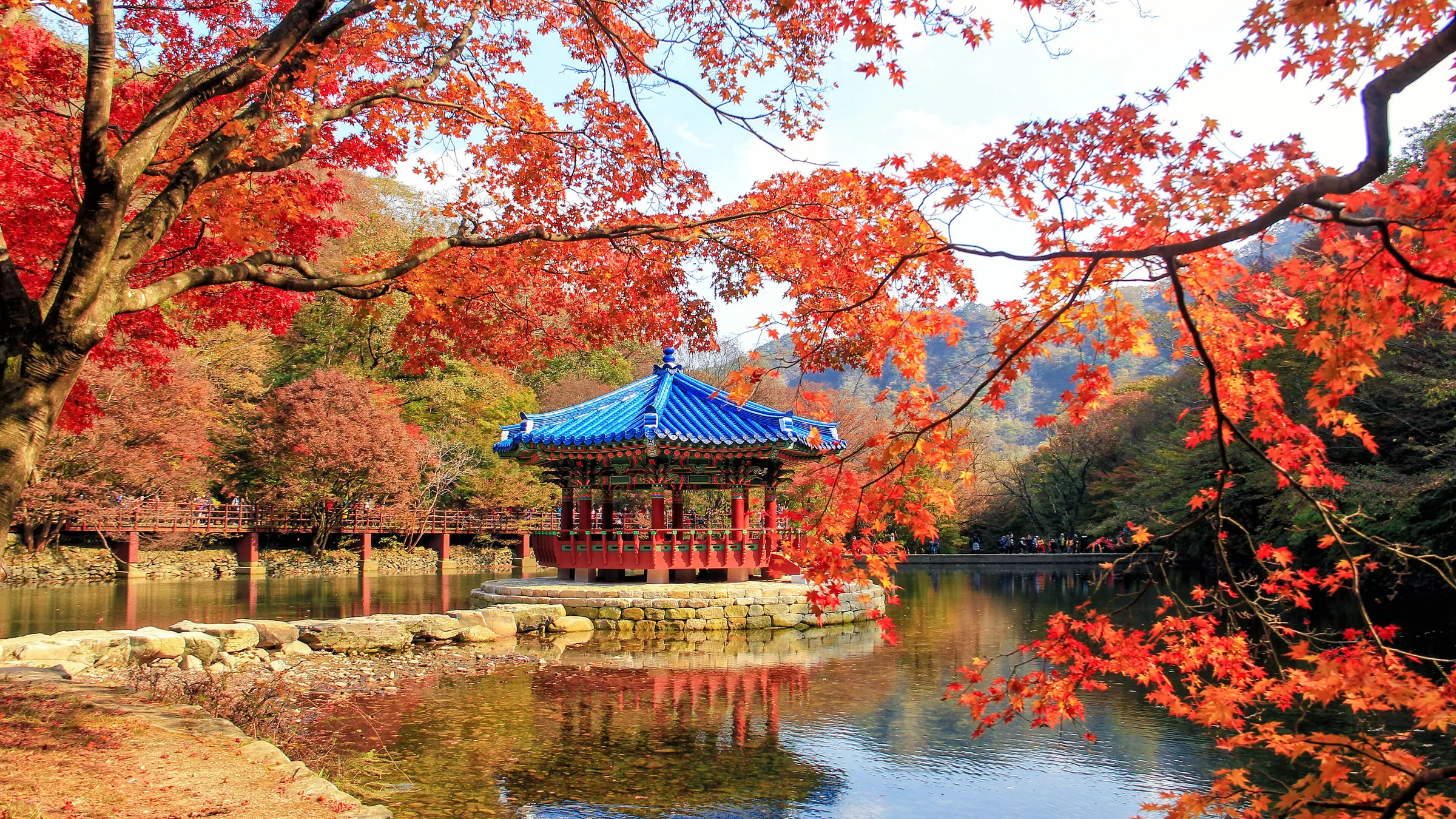
Autumn is widely considered the best season. Skies are often clear, humidity drops and temperatures are comfortable. Autumn foliage begins in the northern mountains, such as Seoraksan, in mid-October and moves south, with Seoul's palaces and parks and the mountains of the south typically colorful from late October into early November.
Winter: December to February
Winters are cold and dry, especially in Seoul and the mountains, with temperatures often below freezing. Skies are frequently clear and crisp, and it is the season for skiing, winter festivals and warming food. Visitor numbers are lower, apart from the holiday period.
Month by month
| Month | Weather | Highlights | Notes |
|---|---|---|---|
| January | Cold, dry | Winter sports, fewer visitors | Seollal may fall in late January or February |
| February | Cold, dry | Clear days | Seollal often falls in this period |
| March | Cool, warming | Early blossoms in the south | Possible fine dust |
| April | Mild | Cherry blossoms, usually early April in Seoul | Very popular; book early |
| May | Warm, pleasant | Green landscapes, festivals | One of the best months |
| June | Warming; rain arrives late month | Early summer | Monsoon usually begins late June |
| July | Hot, very wet | Beaches after the monsoon | Heavy rain and humidity |
| August | Hot, humid | Beach season | Typhoon risk begins |
| September | Warm, drying | Pleasant late summer | Chuseok often falls in this period |
| October | Mild, clear | Autumn foliage begins | One of the best months; Chuseok sometimes falls here |
| November | Cool | Peak foliage early in the month | Cooler evenings |
| December | Cold | Winter lights and festivities | Ski season begins |
Holidays to plan around
Two major holidays follow the lunar calendar and move each year:
- Seollal (Lunar New Year), usually late January or February.
- Chuseok (the autumn harvest festival), usually in September or early October.
Each lasts around three days, often extended by weekends. Many Koreans travel to their family homes, so trains and highways are very busy, and some shops, restaurants and attractions close. Seoul can be pleasantly quiet, but plan transport and dining carefully.
Jeju Island
Jeju, off the south coast, is milder than the mainland in winter but windy, and it is usually the first place to see spring blossoms. It is wetter in summer and more exposed to typhoons. Spring and autumn are the best times for hiking Hallasan and walking the Olle trails.
Our advice
For a first trip, we usually recommend mid-April to May or October to early November. If cherry blossoms or foliage are the focus, we build flexibility into the itinerary, because timing varies each year and moves with latitude. Winter is a good choice for travelers who enjoy crisp weather and fewer crowds; summer works best with a focus on the coast and an itinerary that allows for rain.
See our guide to planning a first trip to South Korea, the South Korea destination guide, and our 18-day Japan and South Korea journey.
Frequently asked questions
When do cherry blossoms bloom in South Korea?
Usually from late March in the south and on Jeju to early April in Seoul, depending on the year. Official forecasts are published each spring.
When is the rainy season in South Korea?
The monsoon (jangma) typically runs from late June to late July, though timing varies.
Is South Korea worth visiting in winter?
Yes, if you dress warmly. Winter offers clear skies, skiing, fewer visitors and comforting Korean food, though it is cold, particularly in Seoul.
When do the leaves change color in Korea?
Foliage typically begins in the northern mountains in mid-October and reaches Seoul and the south from late October into early November.